The Rise of AR in the E‑commerce Sector
AR has matured significantly in recent years: it has become faster, more stable and easier to integrate. As a result, AR is set to become one of the fastest-growing solutions in e-commerce in the coming years. In this article, we look at what is driving this development and what it means for online stores.
 Gábor Litvai
Where things stand today
In e-commerce today, the biggest challenge is not reaching the customer – it is making them confident in their decision. Most online stores struggle with similar problems: low conversion rates, high return rates and a growing share of mobile traffic, where shoppers have to decide based on even less information.
It is in this environment that AR technology is becoming increasingly important for online stores. Not as an eye-catching extra, but rather as a concrete decision-support tool that shows customers the product in their own surroundings, at true size and proportions.
What does AR mean in e‑commerce?
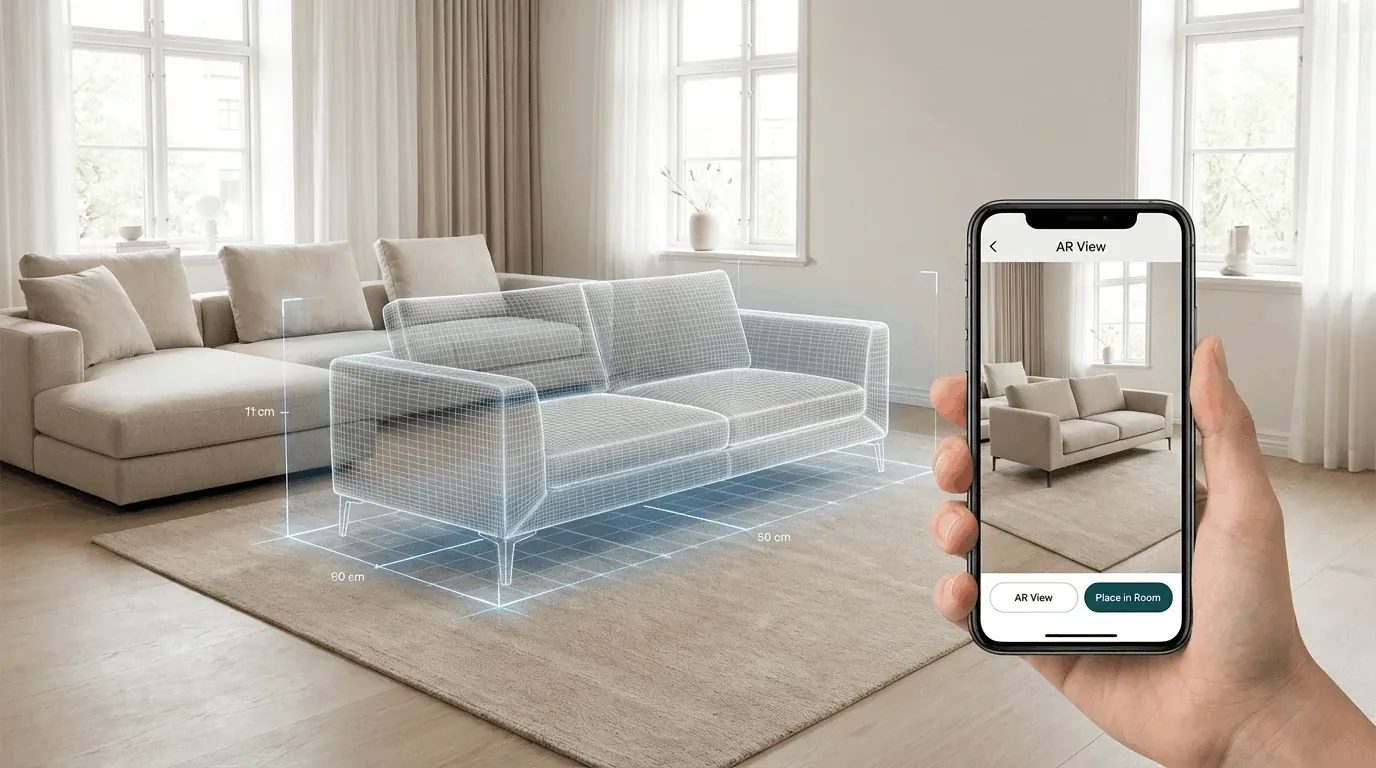
In an e-commerce context, AR (Augmented Reality) means that shoppers can view a product in real space, in their own surroundings – typically on a mobile phone, straight from the browser. A sofa appears in the living room, a lamp on the ceiling, an air conditioner on the wall.
AR makes it possible to display digital products in real space, at real scale, in the shopper's own environment. So the role of AR is not merely to create an experience, but also to reduce uncertainty: it helps shoppers understand more precisely what they are going to get.
Why will AR become a core technology in the coming years?
The rise of AR in e-commerce is not the result of a single technological breakthrough, but of several mutually reinforcing changes. In recent years, key prerequisites have been met that make the use of AR commercially sustainable for online stores.
Below, we look at three key factors that explain why AR will become a product visualization tool actively demanded by shoppers in the coming years.
1. The maturity of WebAR and mobile AR technologies
In the past, AR experiences often required a separate app or specialized devices. Today, more than 95% of modern smartphones in use are technically capable of displaying AR using their built-in camera and sensors – thanks to evolving standards, software and hardware solutions, and the AR platforms built into operating systems, such as Google ARCore and Apple ARKit.
At the same time, WebAR has emerged: AR solutions that can be accessed from the browser, without installing anything. This drastically lowers the barriers to entry and significantly expands the reachable user base. Practically anyone who shops online becomes a potential AR user.
2. Standardization and technological stability
In the field of 3D content, standards such as glTF and Apple's USDZ format have become widespread and are now considered industry standards for web and mobile display. For an online store, this means AR is not a short-lived technology experiment, but a solution that can be built on stable foundations for the long term.
Standardization reduces technological risk: 3D models can be reused across multiple devices and platforms, so an AR rollout can easily be extended and scaled later. From a business perspective, this results in more predictable operations and more efficient use of resources.
3. Faster 3D content creation
One of the most important foundations of AR experiences is the availability of high-quality 3D content. In the past, creating a 3D model of a product required specialized expert work taking many hours or even days, which was a serious barrier to entry for many online stores.
Although AI-based 3D solutions have existed for years, they have only recently become truly mature and widely usable. As a result, production time has been cut significantly and costs have come down, so far more products can now be brought into AR display – even at scale, integrated across the entire assortment.
This change is especially important for online retailers, because it allows not just a few featured products but even entire product categories to be included in AR display, gradually and in a commercially plannable way.
What can an online store gain, even in the short term?
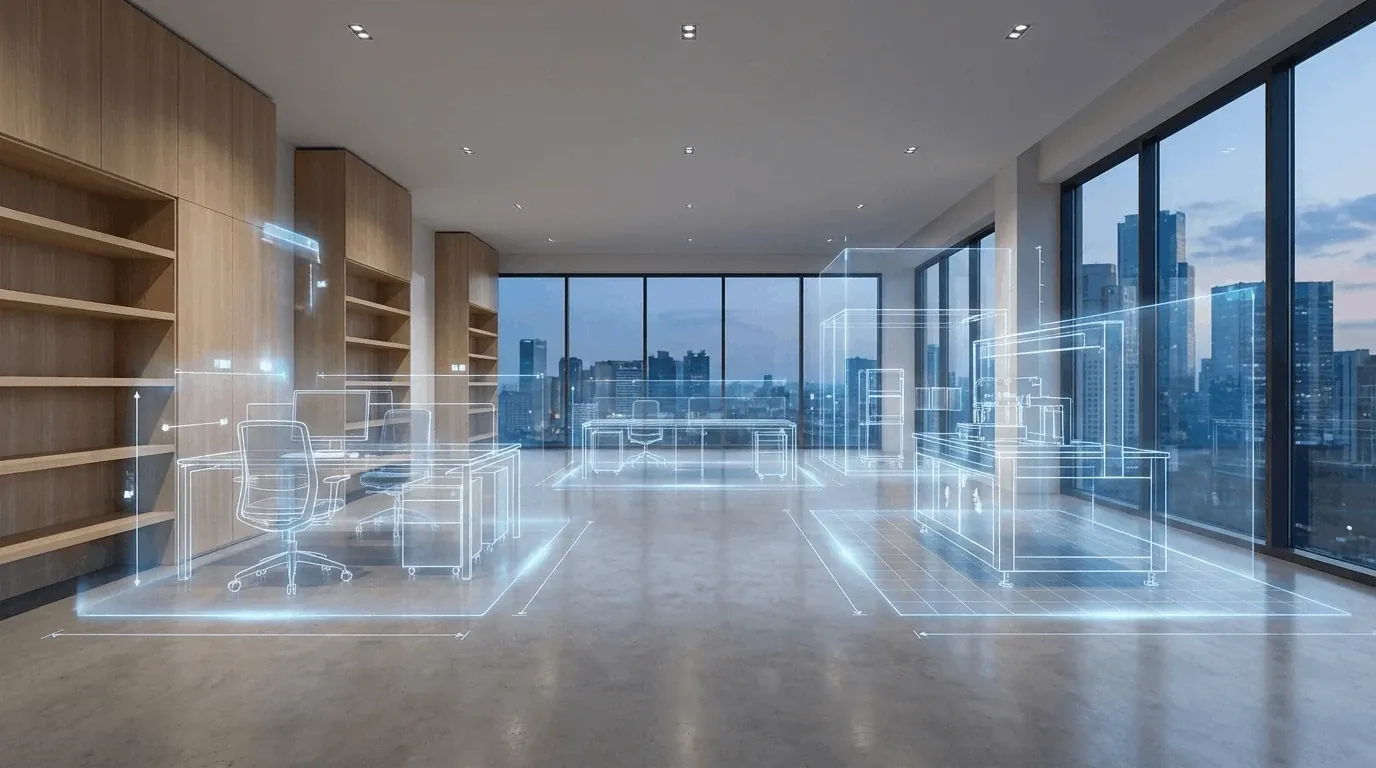
Using AR in e-commerce is not only a technological step forward – it also delivers directly measurable business impact. Interactive products displayed in real space reduce shopper uncertainty, which leads to stronger trust and more confident decisions. The effects show up on several levels.
According to international industry data, product pages that use AR see significantly higher shopper engagement: visitors stay on the page longer and are more likely to go on to purchase. More accurate product information leads to fewer misunderstandings and less disappointment, which directly contributes to higher conversion and fewer returns.
In addition, AR display also acts as a signal of innovation. Online stores that offer modern, interactive product presentation come across to shoppers as more trustworthy, more professional and more forward-looking. This positive brand image matters not only for the first purchase but also strengthens customer loyalty over the long term.
Ultimately, these effects are reflected in business metrics: higher conversion, lower returns and growing basket value. In the next article, we will use concrete case studies and data to show exactly how much improvement these numbers represent in practice.