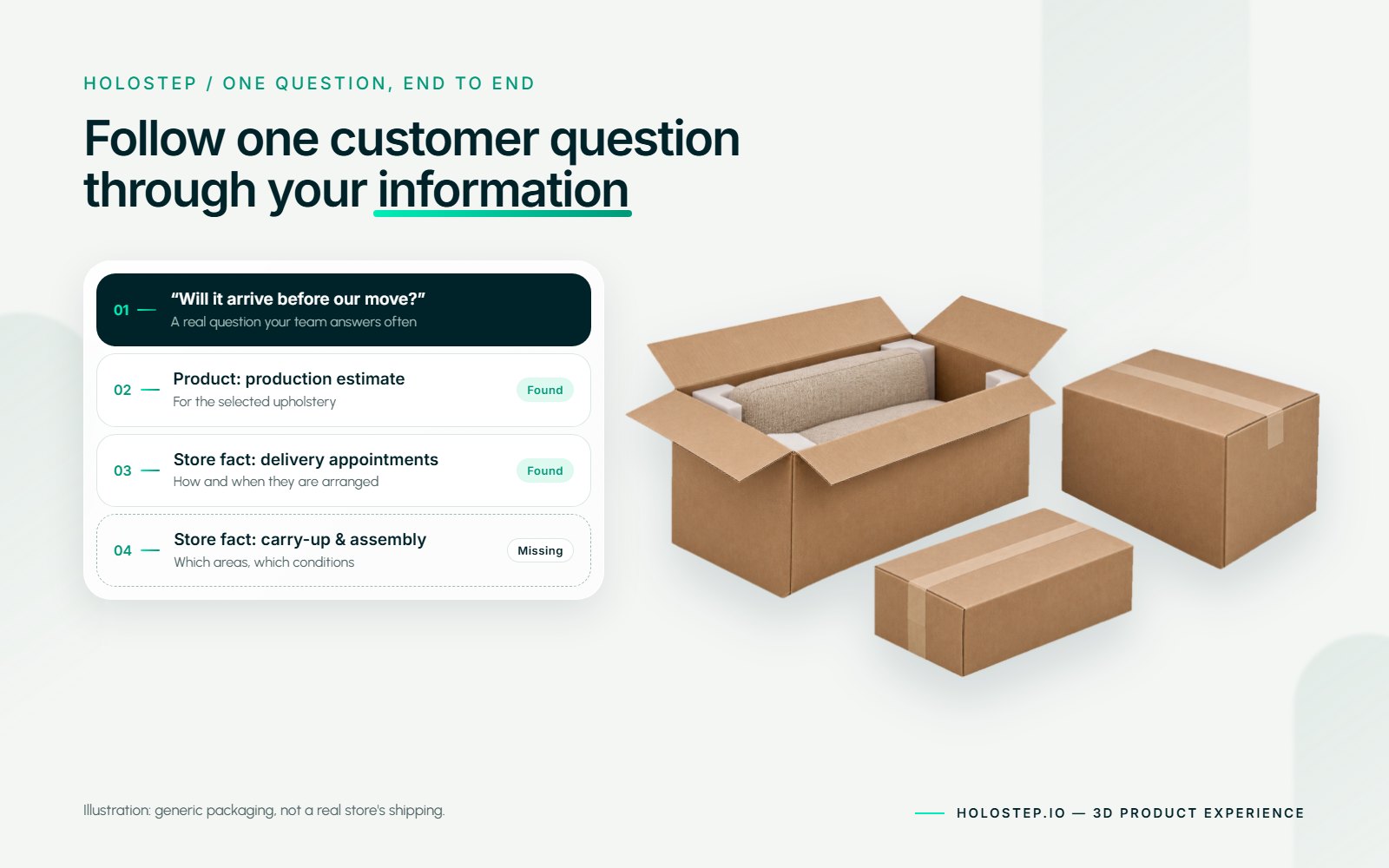
A shopper asks an AI assistant whether a sofa can arrive before a house move. The product looks suitable, but the answer depends on several conditions: whether that fabric is stocked, when production starts and how delivery is arranged.
For a furniture retailer, those conditions deserve the same attention as the product description. An accurate recommendation becomes more useful when the shopper also understands what happens after choosing the furniture.
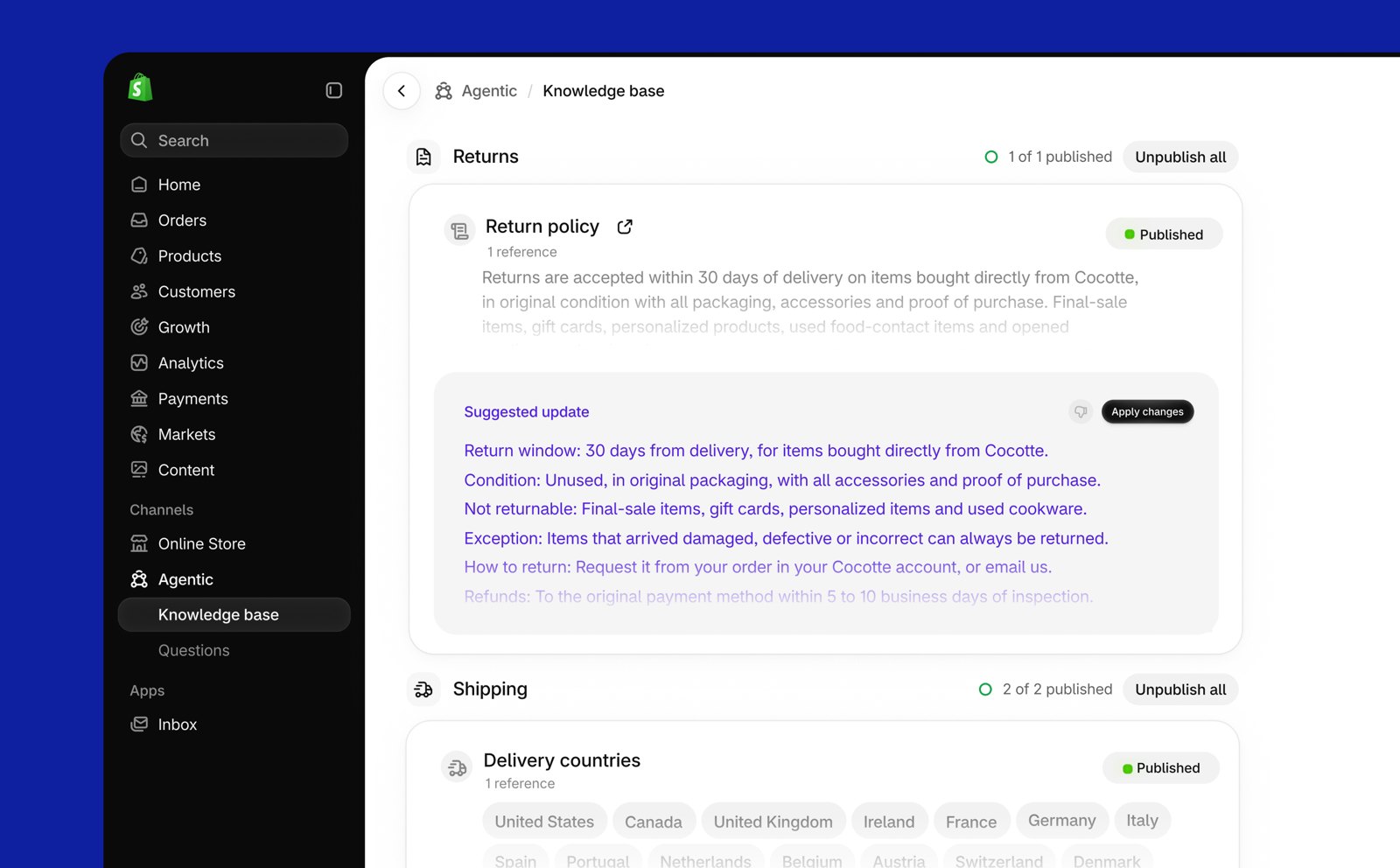
On October 26, 2026, Shopify announced that Knowledge Base had moved into its admin, replacing the standalone app. Merchants can review, edit and publish store facts under Sales channels Agentic Knowledge base. Shopify drafts information from published storefront pages and links it to its source; newly drafted facts remain unpublished until the merchant approves them. Shopify’s announcement.
Holostep / Product vs store
Separate product details from store information
Shopify Knowledge Base holds non-product information about a business, including its return process, shipping timelines and brand values. Product information reaches supported AI channels through separate routes, including Shopify Catalog. Shopify’s agentic storefronts guide.
That distinction matters when organizing a furniture range.
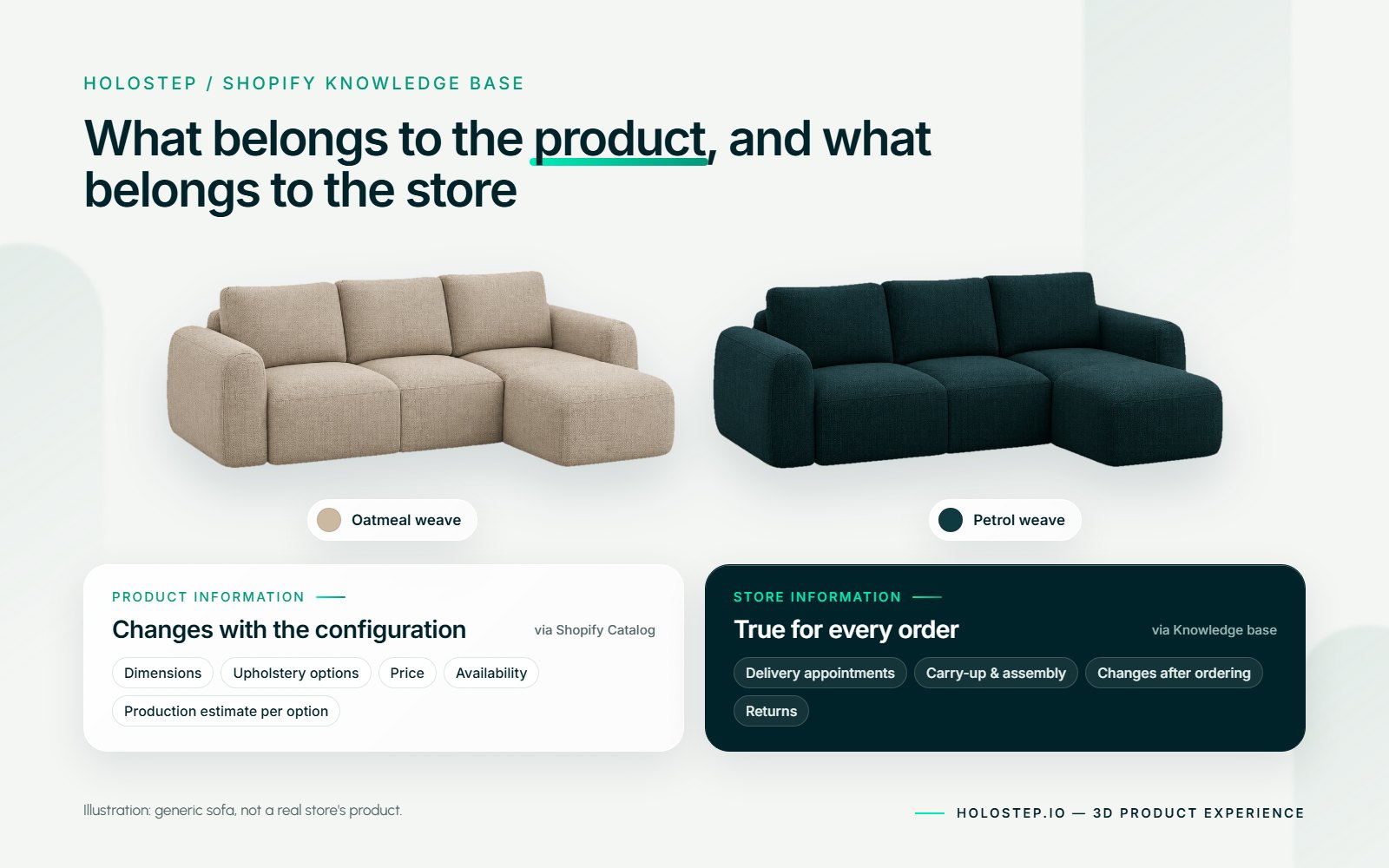
The width of a particular sofa, its upholstery options and its listed price belong with the product. A general explanation of how delivery appointments work belongs with store information. When an answer depends on the selected configuration, the published information should make that dependency clear.
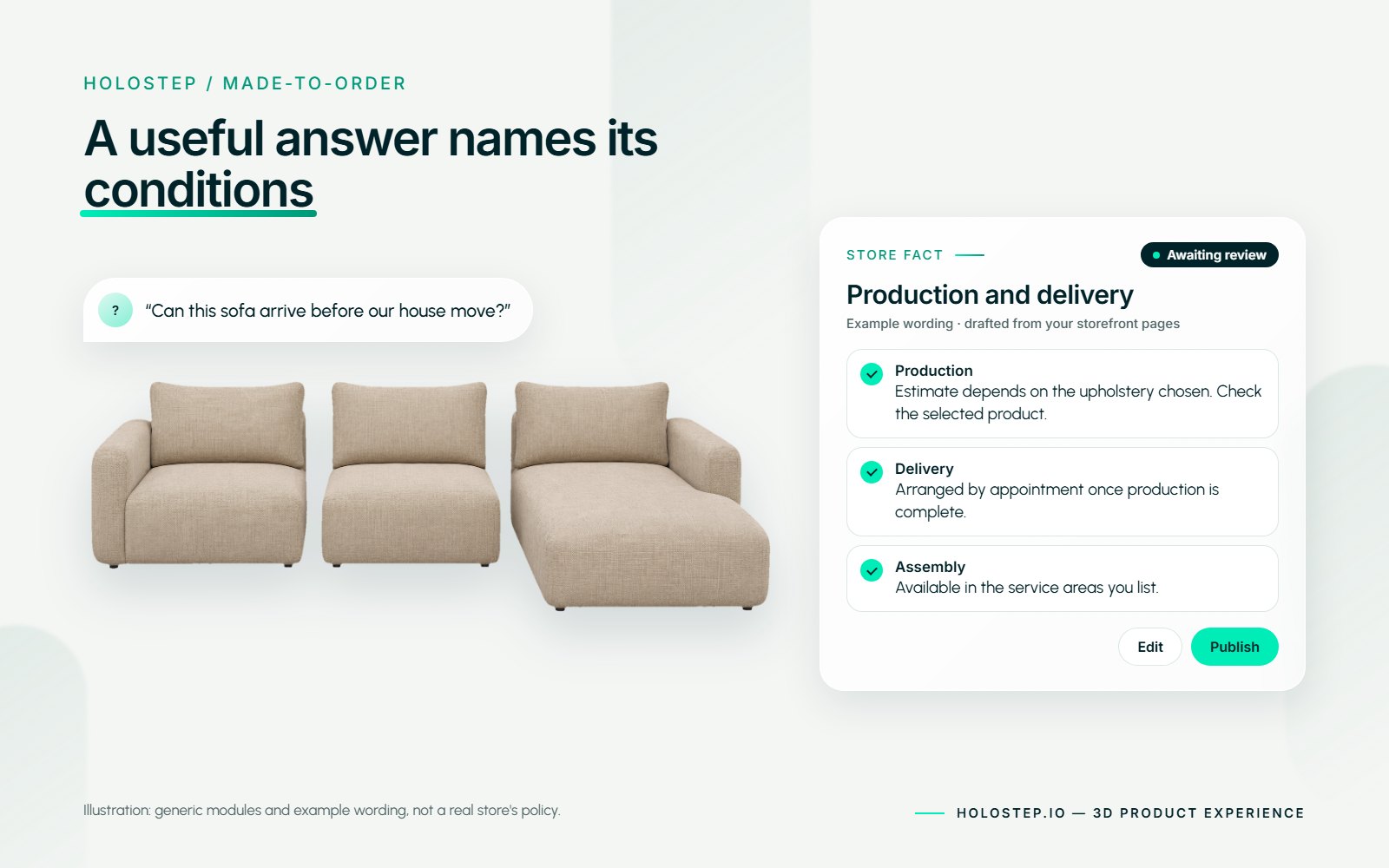
For example, a store might explain that production estimates vary by upholstery choice and that customers should check the selected product’s current estimate. The exact wording must reflect how that retailer operates; a general store statement should not promise a delivery date that only a specific configuration can support.
Shopify’s catalog documentation lists descriptions, options, images, prices and availability among the product attributes shared with AI channels. It also provides mapping tools for stores whose information lives in custom fields. Shopify Catalog documentation.
Holostep / Made-to-order
Explain the conditions behind a made‑to‑order purchase
Start with questions customers already bring to your sales or support team. For a furniture store, useful questions to review might include:
- 01When does the production estimate begin?
- 02How are delivery appointments arranged?
- 03Does the delivery service include carrying furniture upstairs or assembly?
- 04What does the store’s published policy say about changing a configuration after ordering?
Each answer should include the conditions that make it accurate. If assembly is available only in certain areas, say which areas. If production and delivery are separate stages, explain both rather than presenting a single ambiguous timeframe.
Proposed, not observed
These are proposed review questions, not findings about any particular retailer. The purpose is to help a store publish its actual process in language that customers, and the assistants helping them, can understand.
The same explanation should remain consistent across the storefront, product information and the knowledge base.
Holostep / Migration
Review existing facts as well as new suggestions
A publication step is useful, but merchants migrating from the old app should also inspect information that may already be live.
- ≤ 1,000 factsCustom facts and overridden store facts are transferred and published automatically.
- > 1,000 factsAdd the information you want to keep manually before the old app is deprecated on January 15, 2027.
Shopify’s Help Center says that custom facts and overridden store facts from accounts with 1,000 or fewer facts are automatically transferred and published. Stores with more than 1,000 facts need to manually add the information they want to retain before the old app is deprecated on January 15, 2027. Shopify migration guidance.
Reviewing those facts is an opportunity to catch an old delivery explanation, an incomplete service description or wording that no longer matches the storefront.