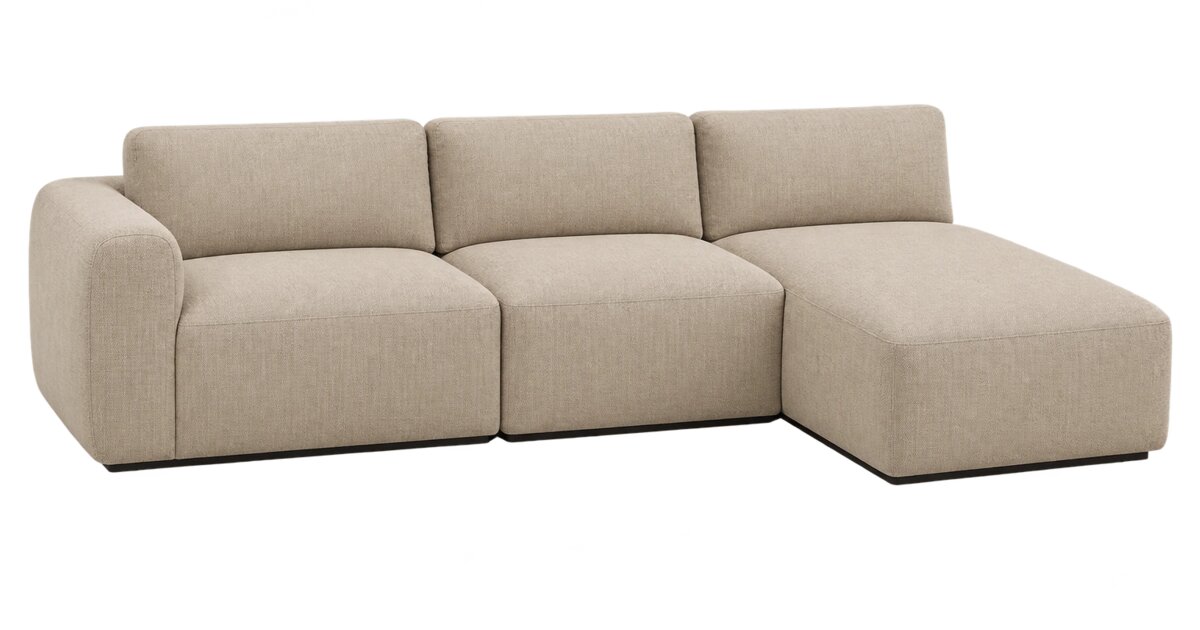
What does a dining room picture promise?
Imagine shopping for chairs for a narrow dining room. You find a pale wood chair you like. On the product page, four of them sit around a table in the afternoon sun. You can picture Sunday lunch there. At home, though, one chair would back onto a wall. The bit of floor you need when you pull it out is just outside the frame.
Google Merchant Center’s guidance on lifestyle images provides a place for pictures that show a product in use or in a furnished room. For images made with generative AI and submitted to Google, the file must retain metadata identifying its synthetic origin. That tells us something about how the picture was made. The dimensions of the shopper’s own room still have to come from the shopper.
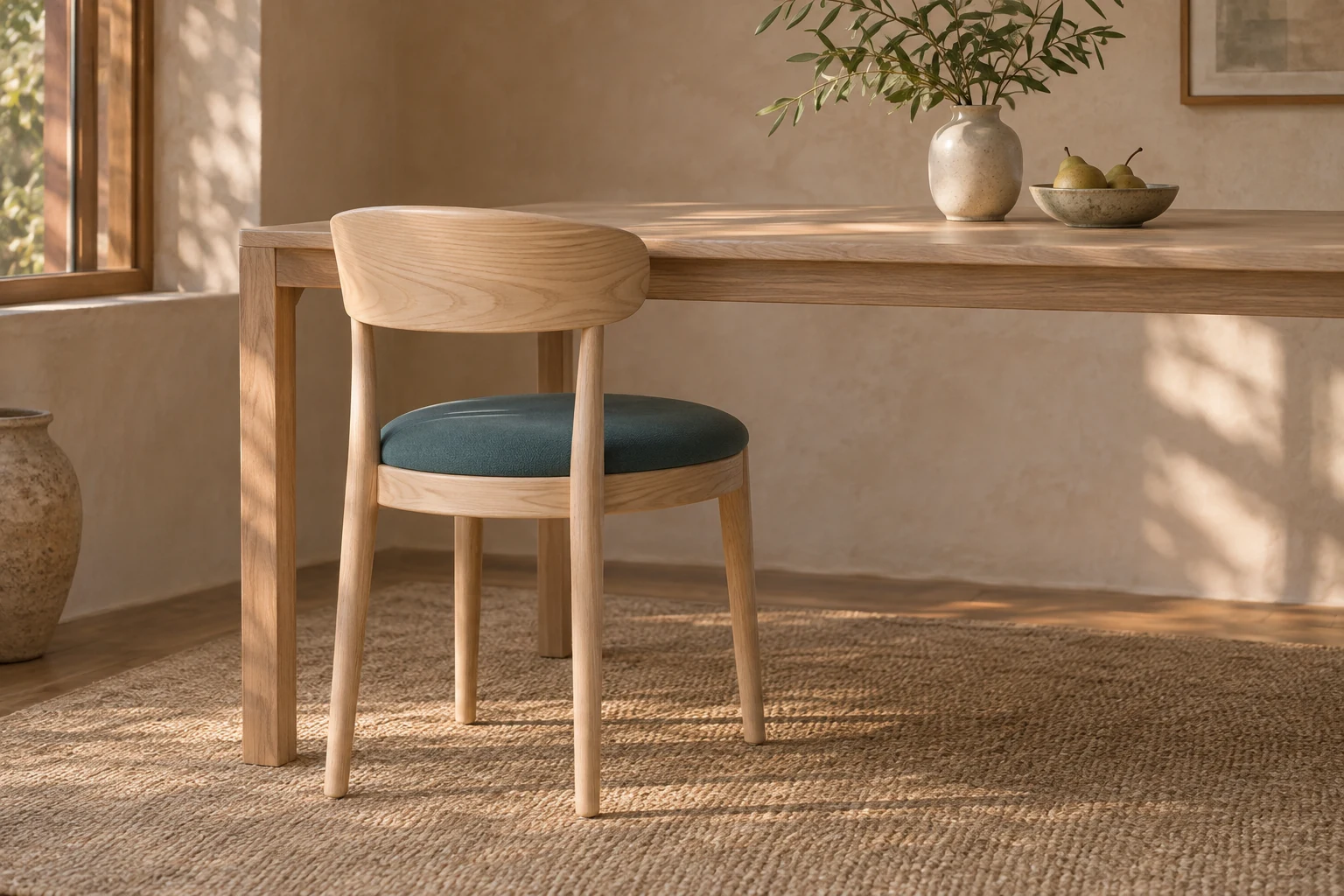
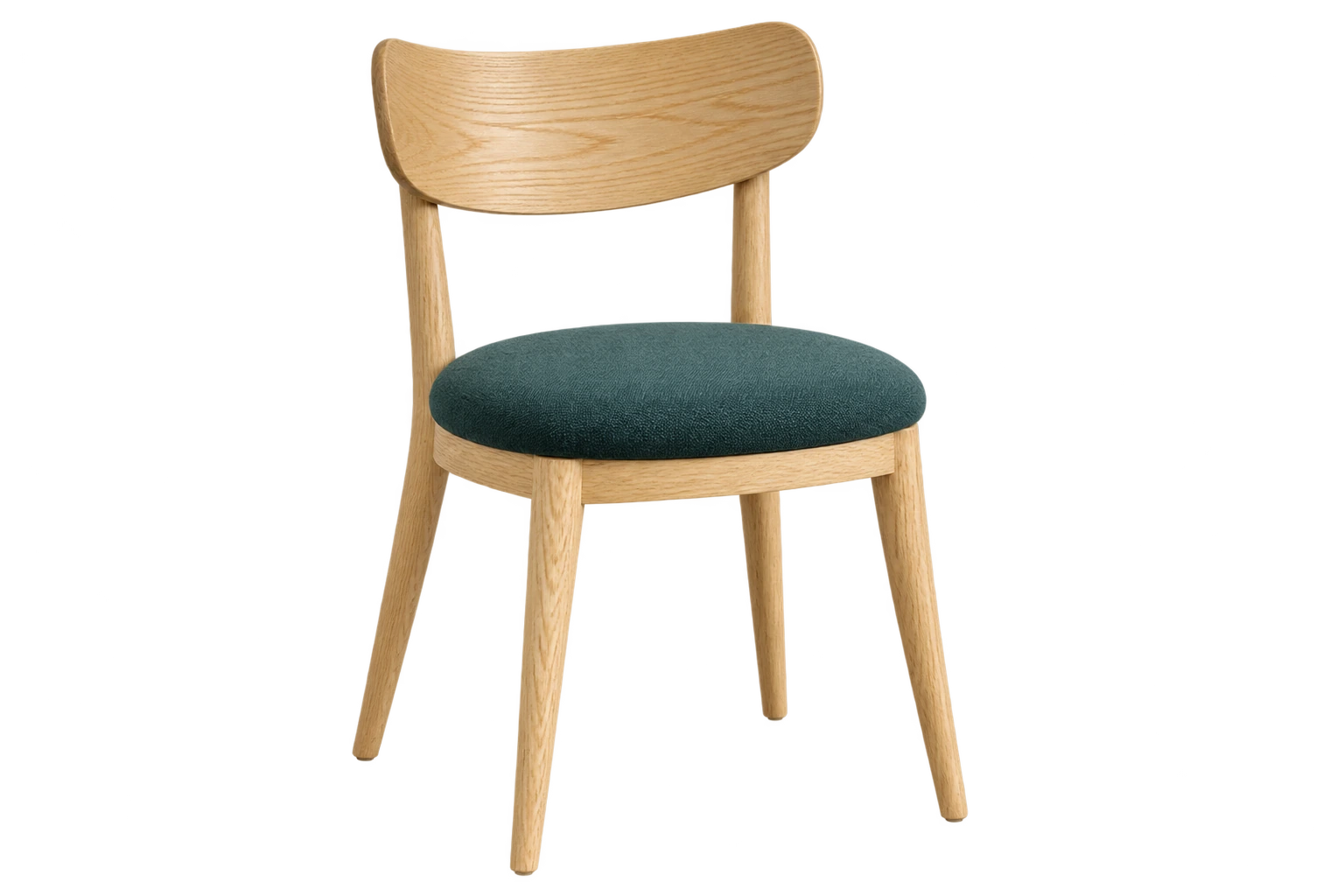
Is that the same chair?
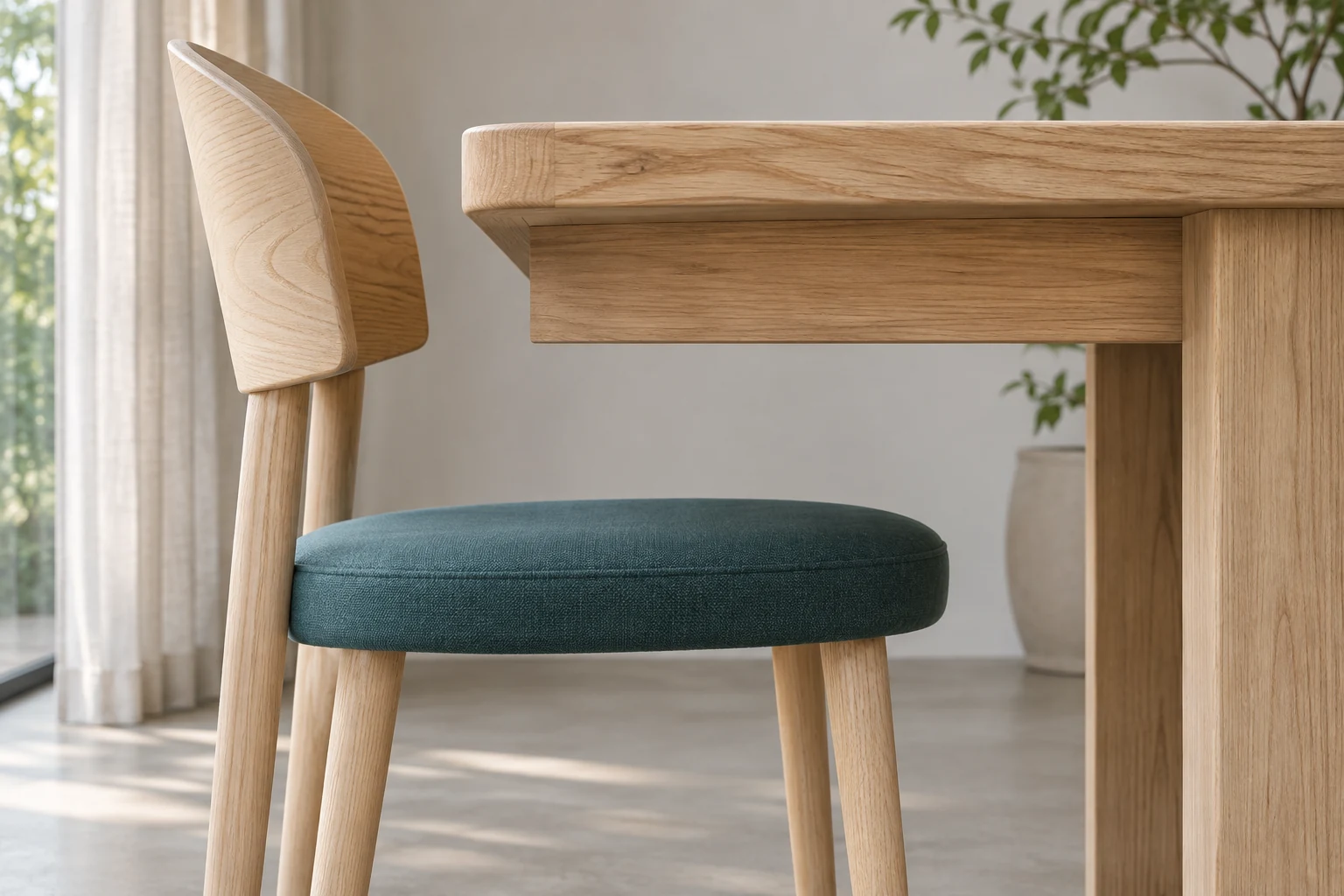
Before publishing a generated room scene, open a photograph of the chair you sell beside it. Trace the curve of the back, count the legs and compare the shape of the seat. Then change the upholstery on the product page. In our audit of 40 furniture websites, we found cases where the image only partly reflected the shopper’s selection. Someone who picks green fabric should be able to recognise the green version in the picture.
I’d put the chair’s width and depth beside the room image. For the table, I’d ask the maker for one easily overlooked measurement. How far is it from the floor to the bottom of the rail just under the tabletop? Someone keeping their own table can check the same thing with a tape measure.
Try the second position
Suppose it is 75 cm from the table edge to the wall. With the chair pulled out ready to sit down, the furthest point on its back is 65 cm from that same table edge. That leaves 10 cm between the chair and the wall. These are two measurements from an imaginary layout. If the way to the kitchen runs behind that chair, you now know exactly what to try at home.
In a room planner, draw your wall and table to their actual dimensions. Place a correctly sized chair under the table, then move it to where you would pull it to sit down. Try the same thing at home with a chair you already own and ask someone to walk behind you. That gives the distance on screen a meaning you can feel.
I enjoy seeing a beautifully set table on a furniture site. Before buying, though, I’d love to move just one chair in that picture. Would the person by the window have to get up every time someone went to the kitchen? If I can try that for myself, I have a much better reason to pick a chair.